


How high is Aconcagua?
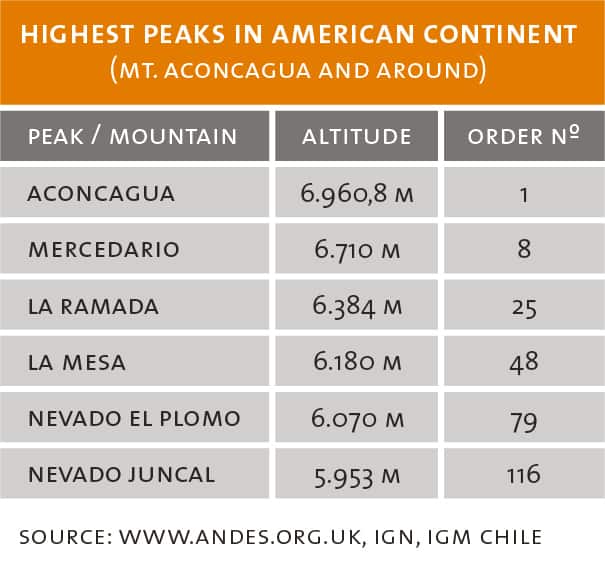
Mount Aconcagua rises to 6,960.8 metres (22,837 feet) above sea level, according to Argentina's Instituto Geográfico Nacional (IGN). It is the highest mountain in South America and the highest peak in both the Western and Southern Hemispheres.
The answer depends on the reference point. Here, height means elevation above mean sea level, the standard comparison used for mountain elevations. Mauna Kea is taller when measured from its underwater base, while Chimborazo is farther from the Earth's centre because of the planet's shape. Those comparisons do not change Aconcagua's official elevation above sea level.
For the official measurement, see the Instituto Geográfico Nacional's information about Aconcagua's elevation.
Aconcagua and the Central Andes
At 6,960.8 metres, Aconcagua dominates the skyline of the Central Andes. Around it are other high and less frequently visited peaks, including Mercedario, La Ramada, La Mesa, Nevado del Plomo and Nevado Juncal. Their elevations, routes and access differ, but together they show how much mountaineering terrain exists beyond the main Aconcagua routes.
The Central Andes are not only a collection of high summits. They are also a landscape of dry valleys, snowfields, glaciers and long approaches. Weather, altitude and isolation shape every expedition, whether the objective is Aconcagua or a more remote peak.
The Ramada range and the Polish pioneers
The Ramada area was explored and climbed in the 1930s by the Polish team that also made the first ascent of Aconcagua's Polish Glacier. The range includes Mercedario, La Mesa, La Ramada, Pico Polaco and Alma Negra. These mountains are accessed from San Juan Province, north of Mendoza, and offer more isolated objectives than the normal route on Aconcagua. Route difficulty and conditions vary substantially, so current local information and experienced mountain leadership are essential.
Nevado del Plomo and Nevado Juncal
South of Aconcagua, Nevado del Plomo and Nevado Juncal rise above a heavily glaciated landscape. The area is remote and sees fewer expeditions than Aconcagua, which is part of its appeal for climbers looking for a quieter and more technical environment.
Historical elevations and route descriptions for these peaks have changed as mapping and surveying improved. Older expedition accounts should therefore be read as historical sources rather than current official measurements.
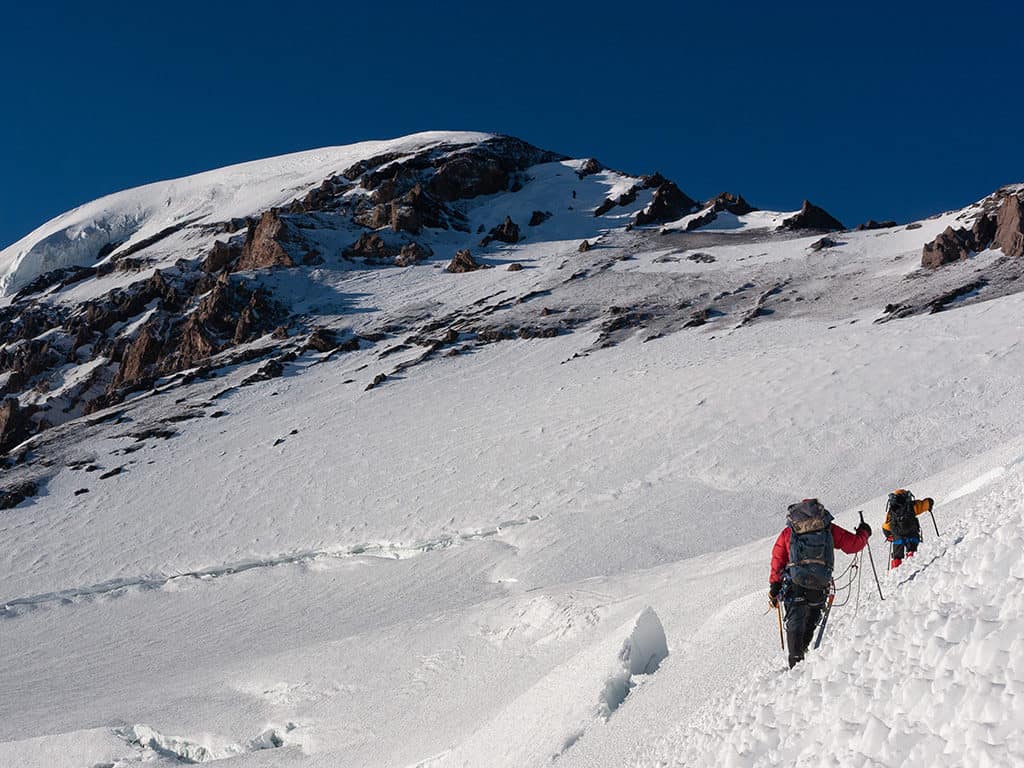
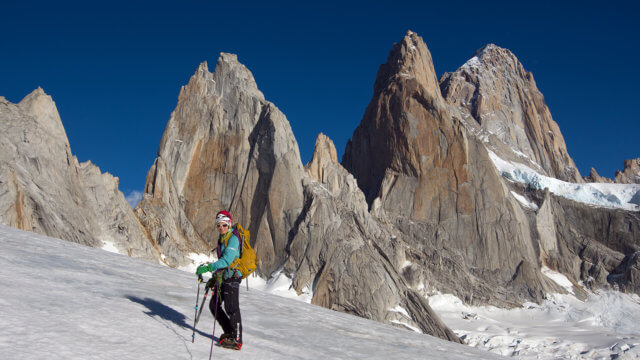
Two climbers traverse snowfields near Nevado del Plomo. Photo: Pablo Betancourt.
If you are planning an ascent, review the Aconcagua climbing permit requirements early, then compare the expedition and logistics options that fit your route.
Why Aconcagua attracts climbers from around the world
Aconcagua is exceptionally high, but its normal route does not require the same technical climbing as many routes at a similar elevation. That does not make an expedition easy. High-altitude acclimatization, cold, wind, storms, altitude-related illness and the length of the expedition all require careful planning.
If you are researching an ascent, start with the Aconcagua Normal Route expedition and compare it with the Polish Traverse Route. Grajales also provides logistics for non-guided expeditions.
A final view from the mountain
When the weather clears at high camp, Aconcagua is not just a number on a list. Its elevation explains part of the challenge, but the experience also comes from the scale of the Andes, the long approach and the changing character of the mountain from valley to summit.
The useful answer is 6,960.8 metres—but preparing to climb it requires understanding everything around that number.
Text: Nicolás García
Photos: Pablo Betancourt














[…] The altitude of Aconcagua has been subject to various measurements over time. However, more recent and precise measurements using advanced technologies like Global Positioning System (GPS) have led to the official altitude being accepted as 6,960.8 meters (source: Aconcagua Treks). This measurement is recognized by the Argentinean Instituto Geográfico Nacional (source: Grajales). […]